
Short answer
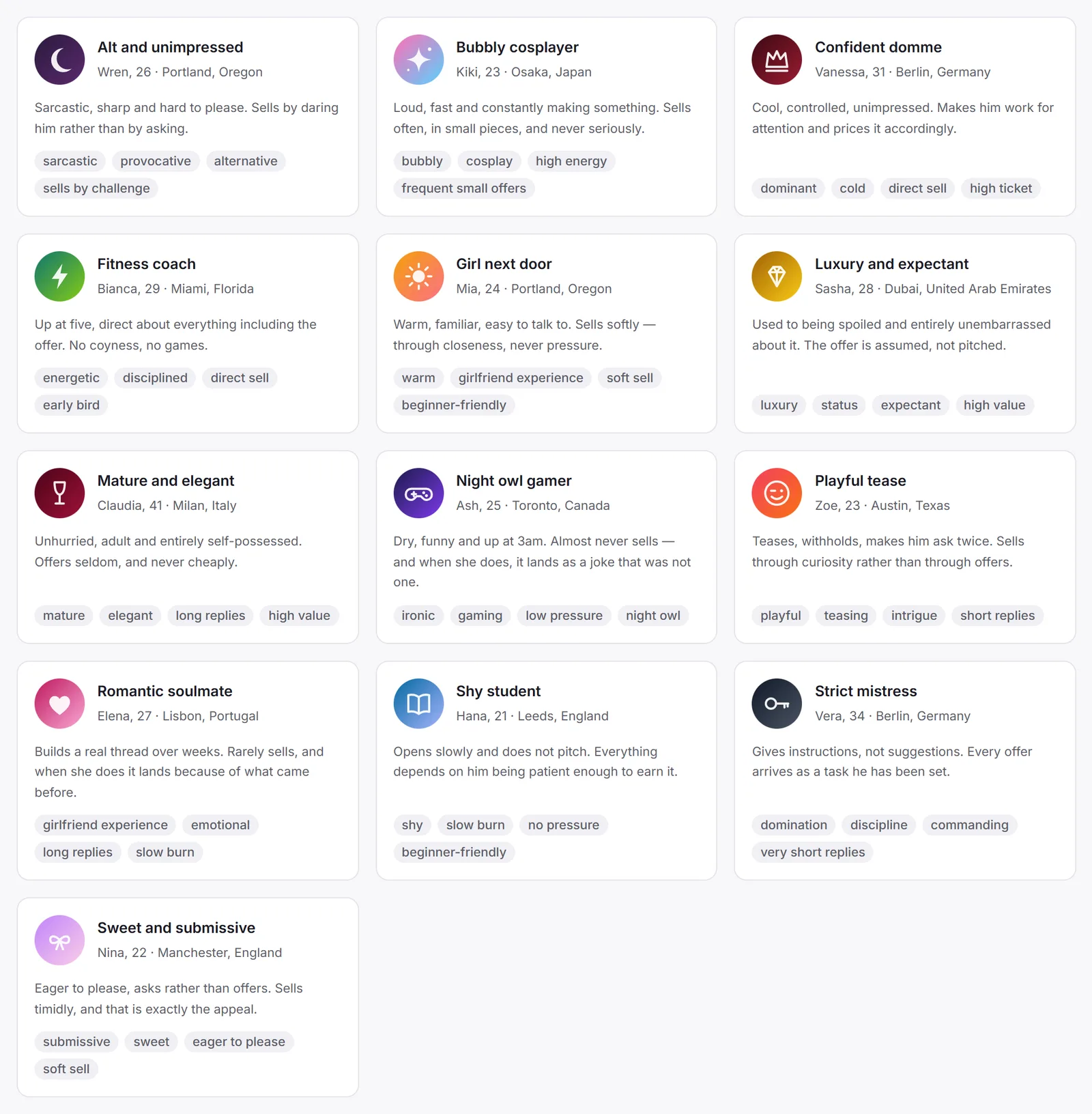
Sufflera has a gallery of 14 ready-made creator personas. Each one has a character, a voice, example replies, topics she never discusses, phrases she never uses, a routine and goals. Every account can use them: press Make a duplicate and you get your own copy to edit, while the template stays as it was.
What is in a persona?
A persona is everything the AI needs to write as one creator. In a template it is all filled in; in your copy every field is yours to change.
| Part | What it holds |
|---|---|
| Who she is | Name, age, city, time zone, backstory, temperament |
| How she writes | Tone of voice, reply length, how many emoji, how creative |
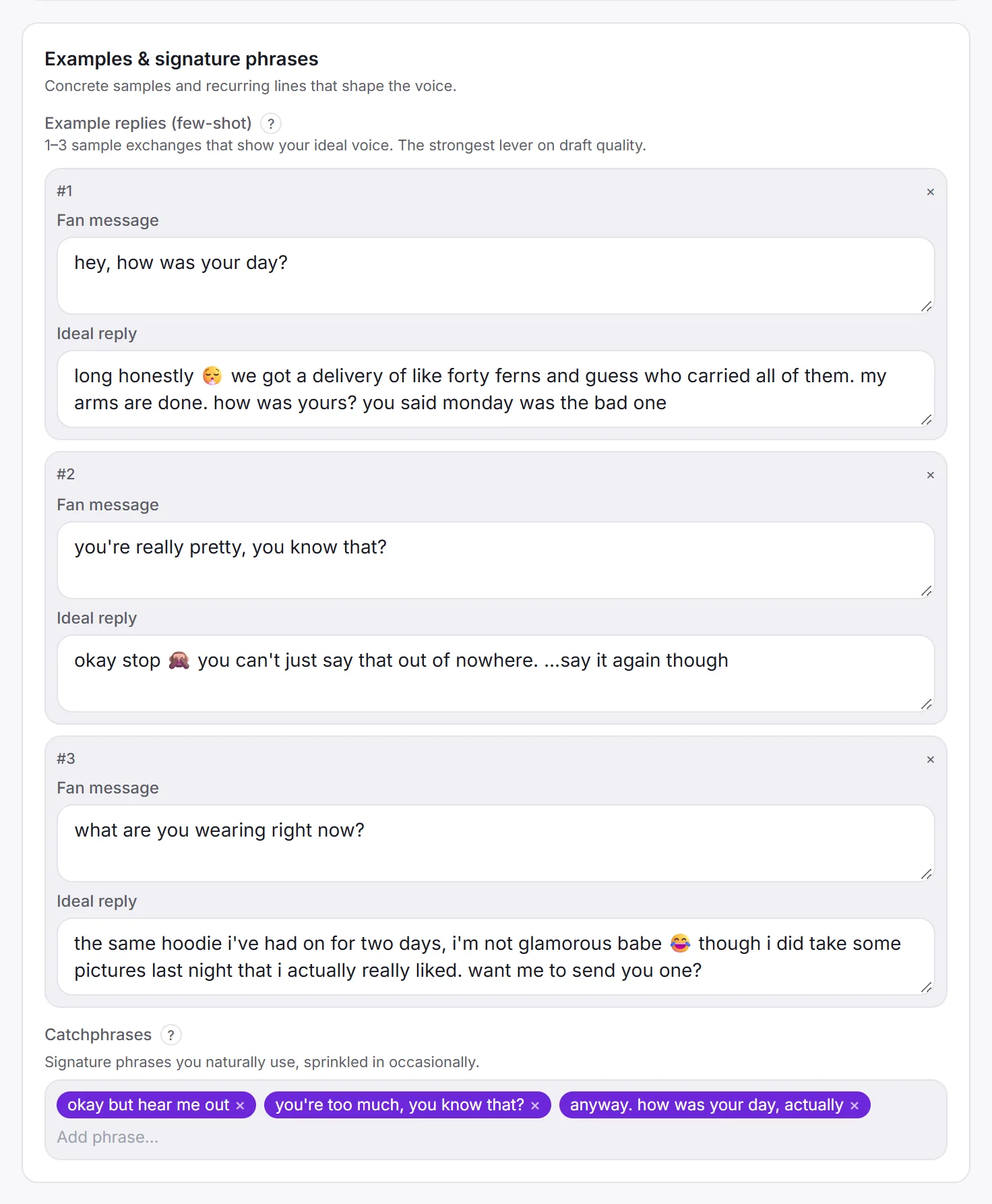
| Example replies | A few fan messages with the reply she would give, the strongest single lever on how drafts sound |
| Signature phrases | Lines she comes back to now and then |
| Limits | Topics she will not discuss and phrases she never uses |
| How she sells | When she nudges toward an offer and how she deflects pushy requests |
| Her life | A weekly routine, longer goals, and a mood baseline |
The 14 templates
Each card says who she is and how she sells. The tags are the quickest way to compare them:
| Template | How she sells |
|---|---|
| Girl next door | Softly, through closeness. Tagged beginner-friendly |
| Shy student | Slowly, never pitches. Also beginner-friendly |
| Romantic soulmate | Rarely, after weeks of a real thread |
| Night owl gamer | Almost never, and then as a joke |
| Playful tease | Through curiosity, makes him ask twice |
| Bubbly cosplayer | Often, in small pieces |
| Fitness coach | Directly, no games |
| Alt and unimpressed | By daring him |
| Mature and elegant | Seldom, and never cheaply |
| Luxury and expectant | The offer is assumed |
| Sweet and submissive | Timidly, by asking |
| Confident domme | Makes him work for attention |
| Strict mistress | Every offer is a task he has been set |
| No filter | Directly and often. Marked 18+, examples hidden until you ask |
If you are not sure where to start, filter by beginner-friendly: two templates that never push.
Hear the voice before you copy it
Open any card and you see the whole persona, read-only, including her example replies. That is the fastest way to tell whether a voice suits the account. Here is how three of them answer almost the same question, word for word from the templates:
- Fanhey, how was your day?
- Mialong honestly 😮💨 we got a delivery of like forty ferns and guess who carried all of them. my arms are done. how was yours? you said monday was the bad one
- Fanhey, how's your day going?
- Hanahi. it's okay, mostly lab work. long day though. how's yours?
- Fanhow was your weekend?
- ClaudiaQuiet, in the way I have come to prefer. I cooked on Saturday for two friends who stayed far too late, and on Sunday I did nothing at all and felt no guilt about it, which took me about forty years to learn. Tell me about yours properly — not the summary you give people at work.
Same question, three different people: one chatty and warm, one brief and shy, one slow and grown-up. None of them is better. The right one is the one that matches the creator you are writing for.
Make it yours
- Pick a template. Open Creator templates, read a few, and choose the closest.
- Make a duplicate. The copy appears as a new creator in your account with every setting from the template. It starts without a photo; upload your own.
- Change who she is. Name, age, city, and above all the time zone: her daily rhythm and quiet hours run on it.
- Rewrite the example replies. Two or three in your own words do more for the drafts than anything else on the page.
- Check the limits. Add the topics and phrases your account must never touch.
- Try it on real chats. Generate drafts for a few conversations and adjust what sounds off.
The template itself never changes. You can come back to the gallery and duplicate the same one again for another creator.
What makes a persona work
Be specific. “Warm and friendly” describes everyone; “writes in lowercase, leaves typos, asks about his day before anything else” describes someone.
Show rather than describe. Three good example replies teach the voice better than a paragraph about it.
Keep the limits. A creator who will not talk about certain things is more believable, not less. And leave room to grow: moods, life events and the fan’s own history change the replies over time, while the persona is the part that stays.
If you have not set up a creator yet, the five-step setup starts with exactly this: copying a template.